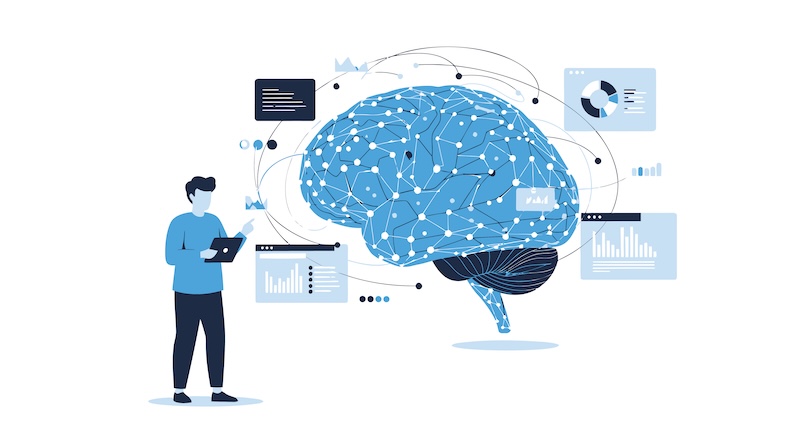
Advertising creative workflows are challenging to manage for human marketers, but as generative AI drives up ad volumes by ten fold or more in the coming years, there will be no way for humans to keep up.
The advertising industry is still treating generative AI as a production story: faster creative development, lower costs, and more outputs. But the real change is that AI is making creative production effectively unlimited. While many brands remain cautious publicly, AI is already becoming part of creative, media, and performance workflows.
When creative becomes cheaper to produce, brands do not create less. They create more. A campaign that once contained a handful of assets may soon contain hundreds or thousands of variations tailored to different audiences, formats, geographies, creators, and contexts. We are moving beyond traditional optimization toward continuously generated advertising.
The challenge will not be generating creative. It will be orchestrating it. As creative volumes grow, marketing systems will need to evolve alongside them.

Infinite Creative Changes the Marketing Operating Model
Most marketing systems were built around finite production and human review. Creative teams made assets, media teams distributed them, and analytics teams measured performance afterward. AI breaks those assumptions. As creative volume explodes, the old operating model starts to fail. Measurement becomes noisier. Governance becomes harder. Brand consistency weakens. Teams lose visibility into what is actually driving results.
At the same time, generative AI introduces a strange paradox. The more marketers rely on AI systems to create “high-performing” creative, the more those systems gravitate toward familiar patterns. Hooks begin to look the same. Story structures flatten. Messaging becomes increasingly interchangeable because models are trained on historical patterns and optimization pressures reward familiarity. The result is a gradual compression of distinctiveness across the market.
Why Does AI-Generated Advertising All Start to Look the Same?
But the opposite problem appears at the same time. AI systems also generate a long tail of unpredictable outputs, awkward tonal combinations, surreal imagery, or creative decisions no human team would intentionally approve. Marketers end up trapped between sameness at the center and chaos at the edges. As every advertiser floods feeds with more content, standing out becomes harder for everyone. The challenge shifts from simply producing creative to understanding which creative decisions actually matter.
That is where much of the industry’s AI conversation still falls short. Most discussions focus on generation, which models are best, which tools are fastest, which workflows save the most money. But generation is quickly becoming commoditized. The harder problem is orchestration.
As organizations deploy larger numbers of creative variants, performance signals become harder to interpret. Teams start testing increasingly fragmented creative cells with smaller sample sizes, and random variance begins looking like insight. Companies generate more content while learning less from it. Without structured understanding of what changed between assets, pacing, emotional framing, brand presence, visual composition, or messaging sequence, organizations lose the ability to compound learning over time. That problem becomes even more important as agentic AI systems begin taking on larger roles in campaign optimization and media buying.
Why Creative Data Becomes Infrastructure
Autonomous systems cannot optimize effectively if they lack structured understanding of the creative they are distributing. Without that intelligence layer, AI risks accelerating inefficiency rather than improving outcomes. Governance becomes an even bigger challenge as well. Most enterprise approval systems were designed for dozens of assets, not tens of thousands, and human review does not scale into an environment where creative generation becomes continuous.
For regulated industries especially, the risk surface expands dramatically as content volume increases. Compliance, platform policies, legal restrictions, and brand standards become exponentially harder to manage when production outpaces human oversight. Governance can no longer function as a manual checkpoint layered onto the end of the process. It has to become embedded directly into generation and optimization systems themselves.
This is why the next era of marketing will not be defined by who can generate the most content. It will be defined by which organizations build the best intelligence systems around that content. For years, brands invested heavily in audience and identity infrastructure to improve targeting and measurement. Creative data may become just as important in the next generation of AI-driven marketing systems because AI systems are only as effective as the data guiding them.
Creative Data Is the Foundational Infrastructure Layer of AI-Driven Marketing
The companies that succeed in this next phase will not necessarily be the ones with the fastest image models. They will be the ones that can connect creative decisions to business outcomes, preserve distinctiveness while scaling variation, and build systems capable of governing creative performance at machine speed.
The real transformation happening right now is not that machines can suddenly make ads. It is that marketing itself is becoming increasingly autonomous, and autonomous systems require structured intelligence to operate effectively.
As creative becomes the largest variable in modern marketing systems, creative data increasingly becomes the infrastructure layer holding the entire system together.
 Joseph Galarneau is Vidmob’s Chief Product & Technology Officer, leading the company’s data science, product, and engineering strategy and operations. A long-time adtech and media executive, Joe formerly served as global head of martech product at Wayfair, CPO at CivicScience and Verve, and COO of Newsweek and The Daily Beast. He also was founder/CEO of Mezzobit, a marketing data platform acquired by OpenX.