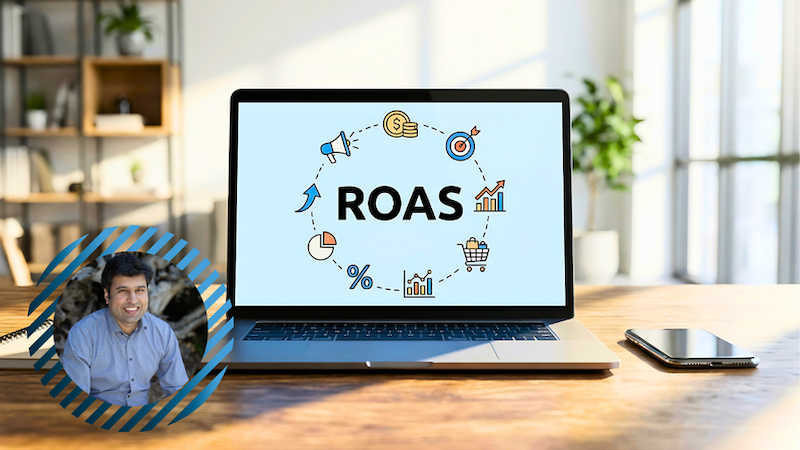
Retail media spend for CPG brands is continuing to rise, but returns aren’t keeping pace. Last year, Amazon’s CPC rose by 8.4%, while ROAS for brands fell by 8.1%.
But retailers aren’t moving their budgets elsewhere; in fact, U.S. retail media spend is expected to pass $69 billion in 2026, with brands allocating 84% of their budgets to Amazon and Walmart, the most competitive marketplaces.
As CPC continues to rise and the number of competing SKUs keeps growing, brands that still optimize manually will only spend more while falling further behind. Adding more budget while relying on manual optimization with weekly review cycles won’t close that gap because marketplace algorithms reprioritize bids by the hour. Brands need to operate at marketplace speed to see returns.
Why Spending More isn’t Producing Higher Returns
When auctions were less crowded and weekly review cycles kept pace with marketplaces, spending more on retail media reliably produced strong returns. Today, several pressures are working against retail media efforts, as spending increases and inventory shrinks.

CPC is rising as more SKUs compete for the same placements. U.S. retail media ad spend nearly tripled between 2020 and 2024, rising from $20.81 billion to $61.15 billion, and the average CPC rose roughly 30% over the same period. As competition grows, so does CPC across categories, making it more expensive to achieve the same results brands saw years ago.
Media spend is disconnected from what’s happening on the shelf. Media bids and digital shelf signals typically live in separate tools and are managed by different teams. When shelf data doesn’t inform media bids, brands can end up paying for traffic they would have received organically anyway. Or worse, brands place spend behind out-of-stock SKUs or listings that aren’t optimized, so their budget drives clicks without conversions.
Agencies managing retail media manually can’t keep pace with marketplace algorithms. Scaling media used to mean adding more agency hours, but agency workflows operate on periodic cycles, while marketplace algorithms reprioritize bids in real time. As CPC rises, teams need to allocate their budgets toward the actual bidding rather than higher retainer fees.
AI shopping agents are influencing purchase decisions before shoppers reach the marketplace. Shoppers used to scroll through search results to narrow their purchasing decisions. Now, they’re skipping this phase and outsourcing discovery and decision-making to an AI shopping agent. More than 250 million customers used Amazon’s Rufus, now Alexa for Shopping, last year, with monthly active users up 149% and interactions up 210%. So even when brands win the bid, those placements reach and convert fewer customers per dollar spent.
The Next Phase of Retail Media Growth Won’t Come from Increasing Spend
Commerce leaders are prioritizing retail media optimization as a top AI investment opportunity in 2026. Brands see agentic retail as a way to improve performance without necessarily increasing budgets.
As CPCs rise, brands need to bid smarter. With more brands bidding in the same auctions, winning placement comes down to who can bid faster and more selectively. AI agents can continuously optimize bids based on real-time signals, like competitor bids and inventory levels, adjusting before competitors can react. These brands using agentic retail are allocating budget to more relevant placements without overbidding on saturated keywords or on terms where they already rank organically.
As shelf conditions shift, brands need bids that respond in real-time. When brands scan the digital shelf and place bids from the same platform, shelf signals like inventory, content health, and search rank inform the team’s decision before a dollar is spent. Bids no longer go to OOS products or listings that lack fundamentals, so the same spend drives conversions rather than just clicks.
Brands need continuous SKU-level execution across every marketplace. With agentic retail, AI agents continuously monitor, recommend, and execute retail media decisions at the SKU level across every marketplace, adjusting bids and budgets as performance signals change throughout the day. This means AI agents handle execution, and agencies remain strategic partners for the work that requires their expertise.
Agentic Retail is How Brands Grow Retail Media Returns
Brands need to appear in AI recommendations as agentic commerce grows. As AI shopping agents like Amazon’s Alexa for Shopping and Walmart’s Sparky become gatekeepers for product discovery, retail media has to win visibility beyond marketplace search results. Brands are now competing to appear in AI-curated recommendations as well as in the auctions they’ve always bid into. Agentic retail continuously adjusts bids and budgets, so brands earn visibility across both shopper search and AI shopping agent responses.
Trying to fix retail media with more spend will only result in declining returns and fewer placements. Meanwhile, brands that switch to agentic retail continuously optimize bids and budgets across every campaign and marketplace, taking placements away from retailers that are still tied to the old way.
The divide will only widen as marketplaces move faster and the number of shoppers using agentic commerce grows.
 Himanshu Jain is the Cofounder and Head of Product at CommerceIQ. He is an experienced business leader with 12+ years of experience across product management, customer success, business development, statistical modeling, building enterprise software and services. Himanshu leads product management for the CommerceIQ Advertising platform. Prior to CommerceIQ, Himanshu advised fortune 100 companies at Kearney and started his career building machine learning models at Capital One. He has a B.Tech. in Mechanical Engineering from the Indian Institute of Technology, New Delhi and an MBA from the Ross School of Business, University of Michigan.