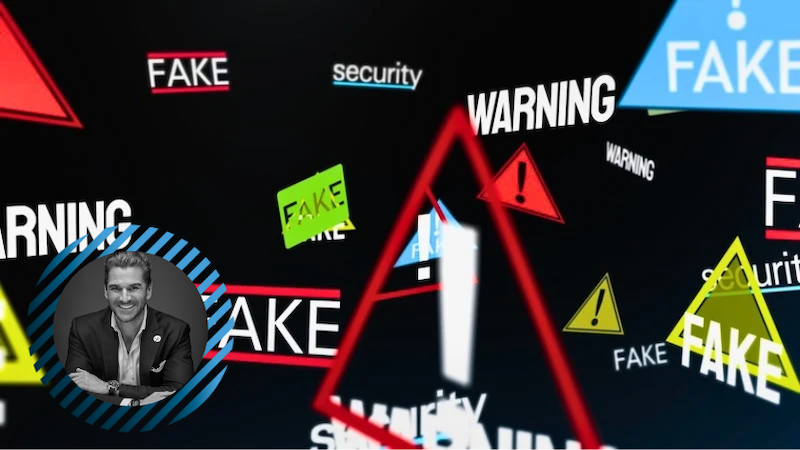
You may know the famous John Wannamaker quote: “Half the money I waste on advertising. The trouble is, I don’t know which half.” Well, perhaps we should amend it: “The trouble is, I don’t know which quarter. Because the other quarter is stolen.”
In a recent survey by measurement company Branch, senior enterprise marketers estimate they waste 27% of their budgets on ad fraud. And that’s not an idle guess: Ninety-eight percent of those surveyed are ‘somewhat’ to ‘very confident’ in their method of detection. And those numbers are backed up: Both Juniper Research and AdWeek have reported similar amounts of fraud in independent studies.
Let’s pause on this: 27% of your budget isn’t a rounding error. To the average respondent, this represents an annual $3 million loss. The IAB estimates the digital ad market will top $300 billion this year, that means $81 billion is lost — greater than the combined GDP of Iceland and Lebanon. How can this be?
What Is Ad Fraud and How Does It Work?
Fraud is an unpopular reality of digital advertising. Advertising is an industry where measurement is, at best, elusive. There always has been, and likely will always be, money wasted on advertising. But ad fraud is different. It’s when an actor in the system, knowingly or unknowingly, “creates or simulates online advertisement impressions, clicks, conversions, or data events in order to generate revenue.”

When you drill into the fundamentals, fraud is when an advertiser mistakenly pays a bad actor for sending a spoofed or incorrect performance proxy signal, mistakenly thinking it represents advertising success. And unfortunately, AI is making this potential a whole lot worse.
AI Is Going To Make Fraud A Whole Lot Worse
According to the survey, paid social (29%) and mobile apps (25%) represent the two biggest problem areas for marketers, representing well over half of respondents’ most vulnerable areas of focus. This makes sense. Fraud exploitation of proxy metrics— clicks, impressions, install— means the further away the advertising medium is from your business’s bottom line, the easier fraud can exploit the inability to measure. Social media publishers are large walled gardens where the advertiser has limited access to end users and relies on proxy signals from the ad platforms themselves. The mobile app ecosystem is controlled by Apple or Google, and they are actively working to reduce the measurement signal you can obtain from mobile apps.
Marketers are already seeing fraud get worse, largely thanks to AI: 87% of respondents say their concern about ad fraud has grown over the past 12 months, and 83% say AI is making the problem worse. AI is being used to fake signals, impersonate customers, and deepfake brands. And unfortunately, this is only the beginning. LLMs are just starting to build and introduce new advertising models, and new ad models are notoriously prone to new vectors of fraud exploitation.
Any new marketing channel goes through a learning curve before measurement standards and technical updates weed out inevitable early exploits. You only need to look at the arc of mobile advertising to see the volumes of exploitative and maleficent advertising schemes that bilked huge amounts of ad budgets before anyone caught on. Famously, Uber lost two-thirds of it’s $150 million yearly budget to install attribution fraud. As AI advertising develops, advertisers will unfortunately become victims of new methods of fraud.
Respondents aren’t making idle observations about fraud, they’re taking action. Ninety-eight percent of respondents say fraud concern has changed how they allocate media budgets, with well over half saying those changes are significant.
How Are Marketers Fighting Back Against Ad Fraud?
First, and most fundamentally important, marketers are relying on technology for advertising measurement. Since fraud exploits the proxy-measurement of advertising, the best method of circumventing fraudulent behavior is to better measure the outcome of advertising. Measurement partners are a common answer to helping combat fraud. No one sees more of this than advertising agencies, which manage advertising on behalf of marketers: “Trusted measurement and attribution partners play a more critical role than ever in helping brands separate real performance from noise so media decisions are based on quality outcomes, not inflated metrics,” says Anthony Borgia of Spark Foundry, a subsidiary of the agency giant Publicis.
Second is a flight to trusted platforms. Fraud is demonstrably harder to detect and prevent on open markets. Beyond fraud concerns, the open web has seen its share of obstacles over the last few years; privacy concerns, walled gardens, and algorithmic feeds have all contributed to an economic death spiral on the classic independent publisher-run open internet. This means users and advertisers are reallocating budgets from independent sites to the well-known media walled gardens like Google, Meta, and Amazon. This is one of the major contributors to the open web’s systematic traffic decline and the simultaneous massive growth of the big platforms.
Advertisers are spending more with fewer partners. One respondent put it bluntly, “[Fraud has] changed where budgets go. I’m more cautious about open programmatic buys and lean toward trusted, higher-quality inventory — things like direct deals, private marketplaces, or well-known platforms like Google and Meta.”
Why Is Incrementality Measurement the Best Defense Against Ad Fraud?
Others are focused on more comprehensive methods of advertising measurement. Namely, incrementality measurement. That is, measuring the incremental impact your advertising dollars make on your bottom line. “Incrementality as the new standard,” wrote one respondent simply. Another described it as “increasingly crucial to making sure advertisements are producing actual value.”
And at the end of the day, more comprehensive measurement makes sense. The design of advertising is to drive outcomes. Fraud is enabled by the misinterpretation of proxy estimations of campaign success. If a quarter of ad budgets are wasted on fraud today, the best answer is to learn how to better measure campaign outcomes.
Because while a fraudster can fake a click, they can’t fake adding dollars to your bottom line. And once we wrangle measurement, perhaps we can again alter John Wannamaker’s quote to, “I waste half my money on advertising, so I measure which half and stop throwing that money away.”
 Adam Landis was the founder and CEO of AdLibertas, a mobile app data platform acquired by Branch in 2022. At Branch, he serves as Head of Strategic Growth, where his deep experience in mobile advertising and data helps foster innovation in products that increase the ability to measure marketing performance in an increasingly difficult ecosystem.